
Learn how UV rays damage skin, cause pigmentation, and accelerate premature aging. Understand indoor exposure and how to protect your skin effectively.
Introduction
Modern skincare is no longer just about products — it’s about understanding what truly affects your skin every day. One of the most overlooked yet powerful factors is UV radiation.
UV rays are dangerous because they are invisible and can penetrate the skin even when you are indoors near windows. Many people believe sun exposure only matters outdoors, but daily exposure — even through glass — can silently damage your skin over time.
Understanding how UV rays affect your skin is the first step toward preventing long-term issues like pigmentation, uneven tone, and premature aging.
What Are UV Rays and Why They Matter
Ultraviolet (UV) rays are a form of radiation emitted by the sun. They are not visible to the human eye, but their impact on the skin is significant.
There are two main types that affect skin health:
- UVA rays penetrate deep into the skin and are responsible for aging and long-term damage
- UVB rays affect the surface layer and are the main cause of sunburn
Unlike UVB, UVA rays can pass through windows and remain present throughout the day — making daily exposure unavoidable without protection.
How UV Rays Damage Your Skin
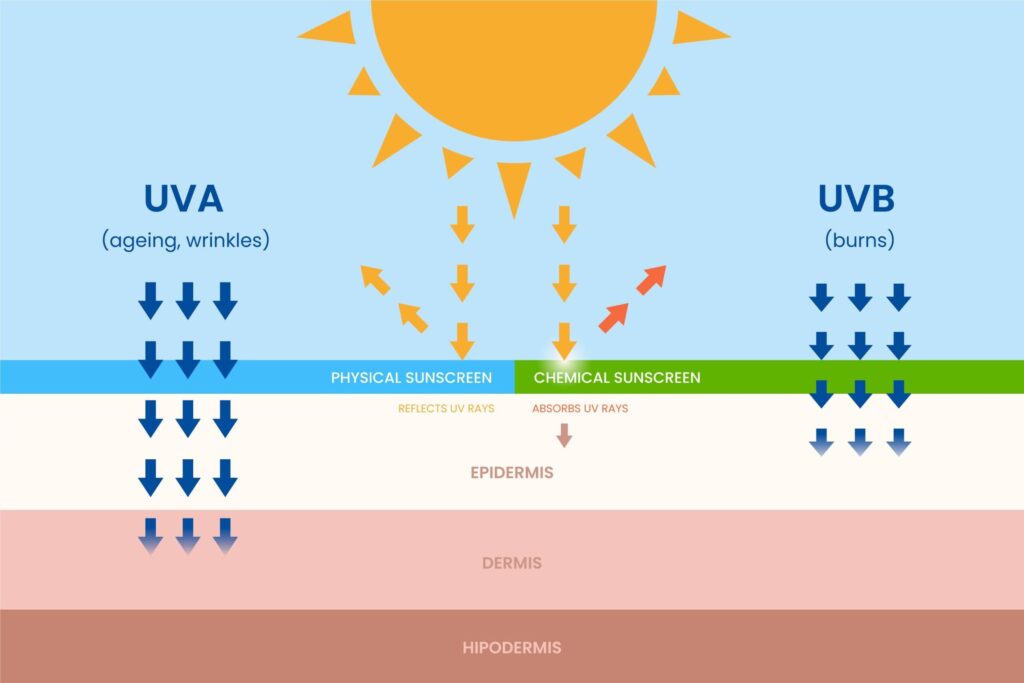
UV exposure doesn’t always show immediate results, which is why many people underestimate its impact. However, at a cellular level, damage begins much earlier.
1. Breakdown of Collagen
Collagen is essential for firm, smooth, and youthful skin. UVA rays penetrate deep into the dermis and gradually break down collagen fibers.
Over time, this leads to:
- Fine lines
- Wrinkles
- Loss of skin elasticity
This process is slow but cumulative, meaning daily exposure adds up.
“Explore the science behind collagen loss and long-term skin aging in our anti-aging guide.”
2. Increased Pigmentation and Uneven Tone
UV rays stimulate melanin production as a defense mechanism. While melanin protects the skin, overproduction leads to:
- Dark spots
- Hyperpigmentation
- Uneven skin tone
This is especially common in individuals who skip consistent sun protection.
3. Weakening of the Skin Barrier
The skin barrier is responsible for maintaining hydration and protecting against external stressors.
UV exposure can:
- Disrupt lipid balance
- Increase sensitivity
- Cause dryness and irritation
A weakened barrier makes the skin more reactive and harder to maintain.
“Learn how skin barrier damage affects hydration and sensitivity in our detailed repair guide.”
4. Premature Aging (Photoaging)
Photoaging refers to aging caused specifically by sun exposure rather than natural aging.
Signs include:
- Fine lines appearing earlier than expected
- Rough skin texture
- Loss of brightness and glow
This is primarily driven by long-term UVA exposure.
Why Indoor Exposure Still Matters
Many people assume staying indoors protects their skin completely — but this is not entirely true.
UVA rays can pass through glass windows and still reach your skin. This means:
- Sitting near windows
- Working in natural daylight
- Driving during the day
…can all contribute to long-term skin damage.
Consistent low-level exposure may not feel intense, but it builds up over time and contributes to pigmentation and aging.
The Link Between UV Damage and Other Skin Concerns
UV damage doesn’t act alone — it affects multiple aspects of skin health.
It can worsen:
- Acne marks and post-inflammatory pigmentation
- Sensitivity and redness
- Uneven texture
This is why many skincare treatments fail to show results when sun protection is ignored.
How to Protect Your Skin from UV Damage
Understanding damage is important — but prevention is what truly protects your skin long term.
1. Daily Sun Protection
Using sunscreen consistently is the most effective way to reduce UV damage. Even on cloudy days or indoors, protection matters.
2. Support Skin Barrier Health
A strong skin barrier helps reduce sensitivity and improves resilience against environmental stress.
3. Avoid Overexposure
Limiting direct sunlight during peak hours and being mindful of prolonged exposure can reduce cumulative damage.
“Understand how SPF actually protects your skin in our complete sunscreen science guide.”
Why Prevention Is Better Than Repair
Many people focus on treatments like retinol or anti-aging products, but prevention is always more effective than correction.
Once collagen breaks down or pigmentation sets in, it takes time and consistency to repair.
Preventing damage early:
- Maintains healthier skin
- Reduces need for aggressive treatments
- Supports long-term skin stability
Final Moral
UV damage is one of the most significant yet underestimated factors in skin health. Because it is invisible and gradual, many people ignore it until visible signs appear.
From collagen breakdown to pigmentation and premature aging, the effects of UV exposure are cumulative and long-lasting.
By understanding how UV rays affect your skin and taking simple preventive steps, you can protect your skin’s health, appearance, and resilience over time.