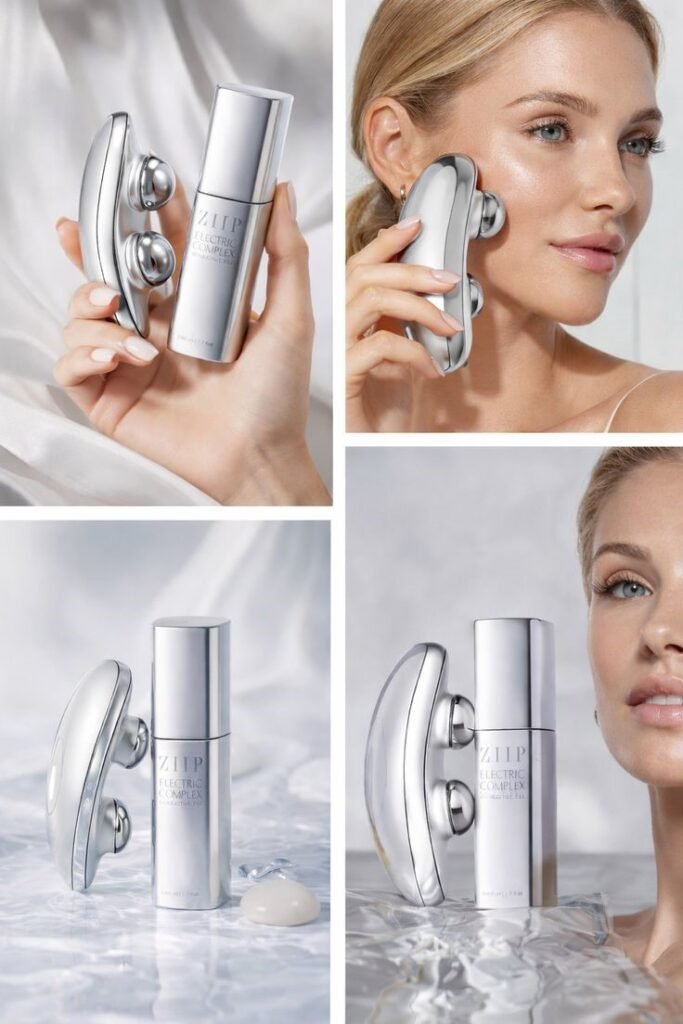
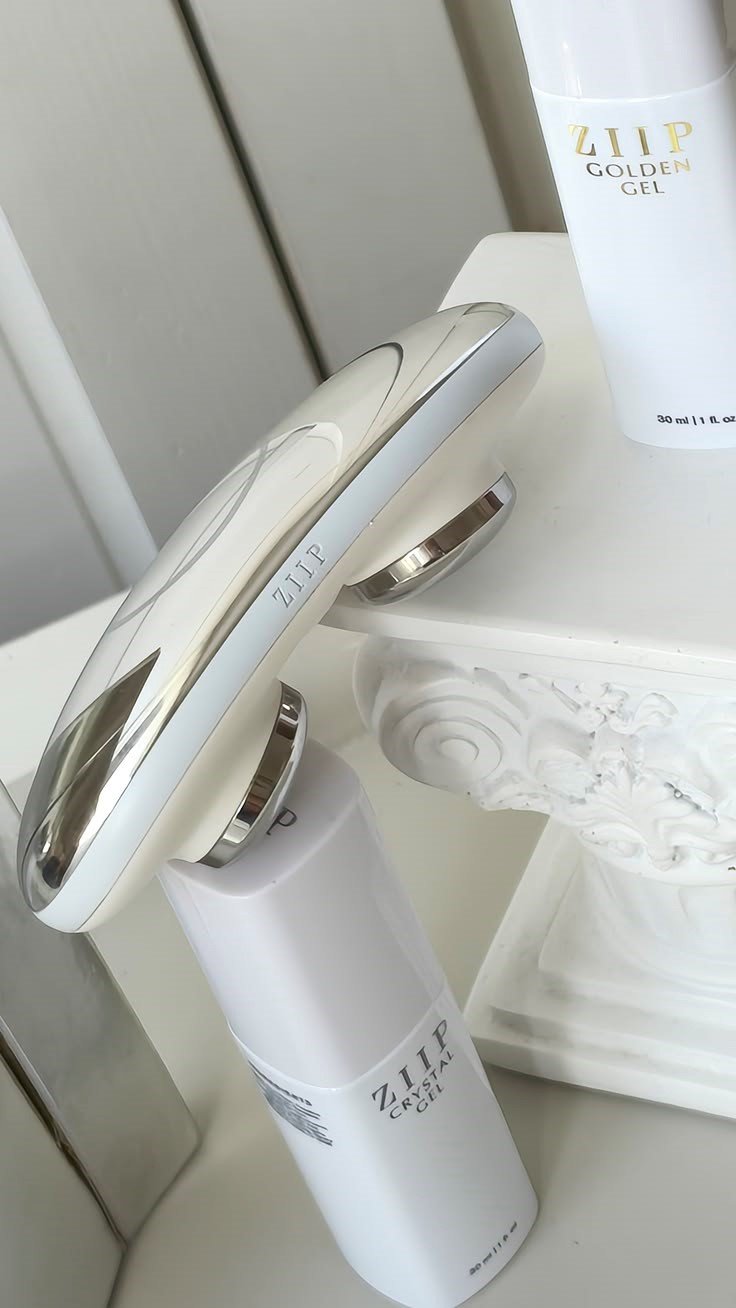
ZIIP HALO Review . A premium microcurrent and nanocurrent facial device with app-guided treatments, a 4-minute facial and multiple electrical waveforms. We look at what the device actually offers, its benefits, limitations, running costs and whether this high-tech skincare tool makes sense for your routine.
There is something about modern skincare devices that makes them increasingly feel like tiny pieces of futuristic technology.
You cleanse your face, apply conductive gel, open an app, and suddenly your evening routine involves electrical waveforms, treatment programs and a device that looks more like a piece of tech than a traditional beauty tool.
The ZIIP HALO sits right in that category.
ZIIP describes HALO as an all-in-one microcurrent facial device using its Dual Waveform technology, combining microcurrent and nanocurrent with app-guided treatments. The current ZIIP product page lists more than 1,500 reviews and a 4.8/5 rating, while the device is positioned as a premium at-home facial treatment tool.
But here’s the part I find more interesting than the technology itself: does all of this actually make a skincare routine better, or does it simply make the routine more complicated?
That is what makes ZIIP HALO worth looking at closely.
This is a research-based review using ZIIP’s published information, available product guidance and independent beauty-editor testing. I haven’t independently laboratory-tested the device, so I’m not going to pretend that manufacturer claims or another reviewer’s results are my own.
Instead, let’s look at what HALO actually brings to the table.
The Two Currents Are the Whole Point
The easiest way to understand ZIIP HALO is to start with its two types of electrical current.
Microcurrent is the more familiar technology. ZIIP positions it around facial toning and a temporarily lifted-looking appearance.
Nanocurrent operates at a much lower level and is marketed by ZIIP as a technology intended to support skin health and rejuvenation.
The company combines these two approaches into what it calls Dual Waveform Technology, with multiple electrical combinations designed for different treatments. Vogue’s two-month review also described HALO as using 26 waveform combinations.
That sounds extremely high-tech, but I wouldn’t automatically translate “more waveforms” into “better results.”
That’s one of the things I appreciate about reviewing devices like this. The specification can be impressive without being the same thing as proven superiority.
The more useful question is whether those different programs actually make the device more versatile in everyday use.
And in that area, HALO does have something interesting going for it.
It Feels More Like a Treatment System Than a Single Device
One of the biggest differences between ZIIP HALO and simpler facial devices is the software.
The physical device itself is compact, but much of its personality comes from the ZIIP app.
The app provides guided treatment programs designed around different goals, while the device also includes a pre-programmed 4-Minute Facial that can be used without the app. Independent reviews have highlighted the app as one of HALO’s strongest differentiators, particularly because it gives users a variety of guided treatments instead of leaving them to figure out movements and timing themselves.
I can see why that would appeal to beginners.
A microcurrent device can look simple until you actually have to figure out where to place it, how quickly to move it and which treatment to choose.
Having a guided routine removes some of that guesswork.
The downside is equally obvious.
If you don’t enjoy using your phone during skincare, the app can become part of the problem.
That’s an important distinction: the app is a benefit if you want guidance, but a potential annoyance if you want simplicity.
The 4-Minute Facial Is Probably the Most Practical Feature
Not every skincare routine needs to become a 20-minute event.
That’s why the built-in 4-Minute Facial is one of the more sensible ideas in the HALO system.
ZIIP allows this pre-programmed treatment to run without relying on the app. Independent reviews also identify it as the quick option for people who don’t want to follow the full treatment library every time.
This matters because consistency is usually easier when a routine isn’t exhausting.
A device can have twenty impressive programs, but if every session requires finding your phone, choosing a treatment, watching instructions and spending twenty minutes in front of a mirror, there’s a good chance it eventually ends up in a drawer.
The 4-minute option makes HALO feel more realistic for busy mornings or those evenings when you want something quick.
It’s a small feature, but probably one of the smartest ones.
You Need Conductive Gel
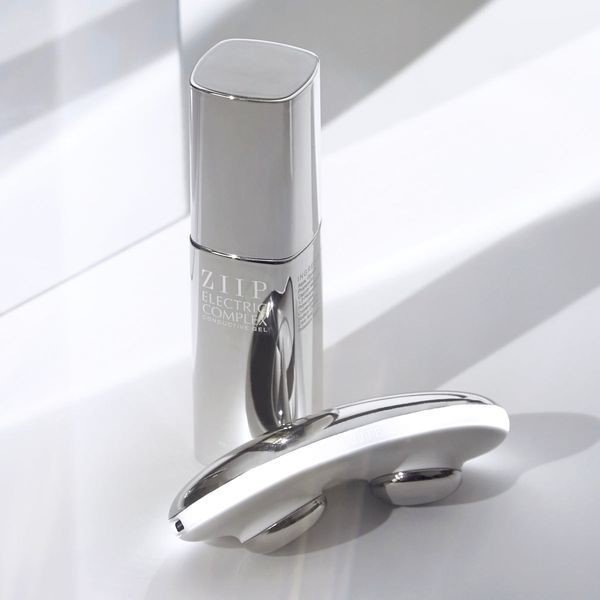
This is something prospective buyers should know before purchasing.
ZIIP HALO is designed to be used with conductive gel.
The gel allows the electrical current to move properly across the skin while also giving the device enough slip to glide rather than drag.
ZIIP sells several conductive gel options, and current independent reviews note that the gels are an ongoing cost to consider.
That doesn’t necessarily make the device a bad value.
But it changes the ownership calculation.
You’re not just buying the hardware.
You’re buying into a routine that includes conductive product.
That is particularly relevant when comparing HALO with other premium devices in the same category.
Microcurrent vs Nanocurrent: Don’t Let the Names Do All the Marketing
This is probably the section where I would be most cautious.
ZIIP makes a big distinction between microcurrent and nanocurrent, and the technologies are technically different. But the amount of independent research supporting nanocurrent specifically as a facial-treatment technology is much thinner than the broader evidence surrounding microcurrent.
One recent independent review specifically noted that the peer-reviewed research around nanocurrent as a standalone facial mechanism is limited, even while acknowledging that the distinction between the two electrical approaches is real.
That doesn’t mean nanocurrent is meaningless.
It means readers should avoid turning a technology description into a guaranteed cosmetic outcome.
ZIIP’s explanation is useful for understanding what the company intends the different waveforms to accomplish. But I wouldn’t write that nanocurrent “rebuilds your skin” or guarantees collagen production.
A more responsible interpretation is that ZIIP has designed HALO around two different electrical approaches and uses different waveform combinations to create different treatment experiences.
That’s interesting enough without overselling it.
What Does It Actually Feel Like?
Independent reviewers generally describe HALO as relatively gentle.
One long-term reviewer described microcurrent as a mild buzz and nanocurrent as almost imperceptible, while another beauty editor reported finding the device intuitive and comfortable during a month-long testing period.
That makes sense for a device designed to be used repeatedly.
You don’t necessarily want a beauty tool that feels aggressive every time you use it.
At the same time, sensation varies from person to person.
The goal shouldn’t be to turn up the intensity simply because a stronger sensation feels like the device is “working harder.”
That’s an easy trap with electrical beauty devices.
More sensation doesn’t automatically equal better skincare.
The App Is Both the Best Part and the Most Complicated Part
If I had to choose one feature that makes ZIIP HALO different, I’d probably choose the app rather than the physical device.
ZIIP has built a library of guided treatments around different concerns and treatment goals. Recent professional reviews have highlighted programs ranging from lifting and contouring to glow and targeted facial routines.
That gives HALO more flexibility than a device with only one preset.
But there is a tradeoff.
Some treatments require the app, Bluetooth connection and your phone nearby.
A recent independent technical review described that app dependence as one of HALO’s biggest advantages and biggest frustrations at the same time.
Personally, I think this comes down to personality.
If you love guided routines, you’ll probably appreciate it.
If your ideal skincare routine is five quiet minutes without another screen, you’ll probably find yourself using the 4-Minute Facial more often.
The Results Question Needs a Reality Check
ZIIP and beauty publications make some fairly strong statements about lifting, firmness, texture and overall appearance.
Independent beauty editors have reported positive experiences. Who What Wear’s month-long review described subtle but noticeable changes, including a more lifted appearance and brighter-looking skin, while noting that results weren’t dramatic.
Glamour UK’s 2026 testing similarly reported a noticeable firming effect and increased glow during its month-long test.
Those experiences are interesting, but they are still individual testing experiences.
They shouldn’t be presented as guarantees.
This is especially important with at-home electrical devices because results can depend on consistency, skin condition, technique, conductive product and individual response.
So I would describe HALO as a device designed to support a more toned, lifted or refreshed-looking appearance, rather than promising that it will permanently change facial structure.
That wording is much more honest.
The Design Is Nicely Focused
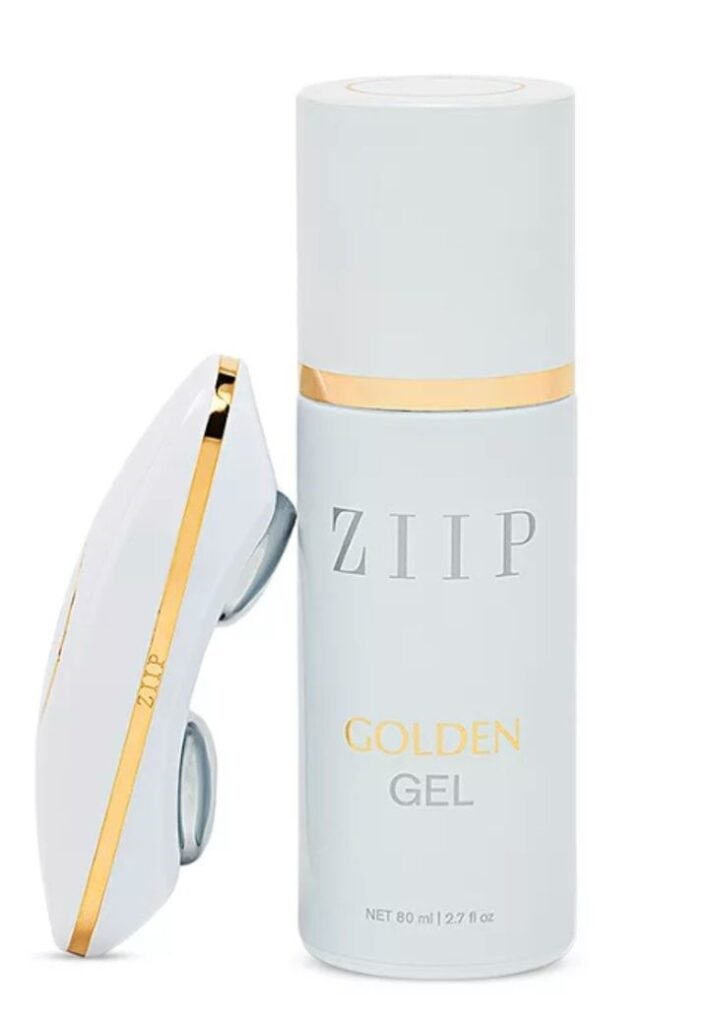
Unlike some multifunction devices that become bulky because they are trying to do everything, HALO keeps the physical design relatively simple.
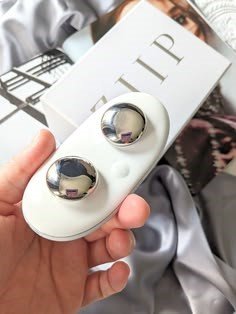
The two rounded conductive spheres are designed to glide across facial contours, and independent reviewers have described the device as lightweight and easy to manoeuvre.
That’s important because technique matters.
A device that looks amazing on a product page but feels awkward around the jawline or cheekbones isn’t going to be enjoyable for repeated use.
HALO’s compact size also makes it relatively travel-friendly compared with larger facial devices.
That seems like a minor advantage until you remember that consistency is one of the biggest challenges with skincare gadgets.
A device you can actually see yourself using is more valuable than one with twice the features that stays inside a drawer.
Where ZIIP HALO Fits Compared With Your Other Devices
This is where the device becomes especially interesting for someone building a skincare-tech collection.
FOREO BEAR™ 2 is easier to understand as a focused microcurrent facial toning device.
MEDICUBE AGE-R Booster Pro takes a completely different K-beauty approach, combining several modes including Booster, MC, Derma Shot and Air Shot with LED and sonic vibration.
ZIIP HALO sits somewhere between those ideas.
It is focused on electrical facial treatments, but its strength comes from the combination of microcurrent, nanocurrent and software-guided programs.
And if you’re interested in a device that tries to combine several completely different facial technologies, our TheraFace PRO review looks at another premium approach to the category.
That comparison makes the differences much clearer.
ZIIP isn’t necessarily trying to be the device with the most physical technologies.
It’s trying to make electrical facial treatments more programmable and personalized.
What I Like About ZIIP HALO
The technology has a clear identity
The combination of microcurrent and nanocurrent gives the device a distinct position rather than making it another generic facial massager.
The app adds real usefulness
The guided treatments can help beginners understand how to use the device instead of guessing.
The 4-minute option is smart
Not every session needs to become a full skincare production.
The device is compact
It’s easier to imagine keeping this somewhere visible and actually using it regularly.
There is a lot of treatment variety
The app makes HALO feel more expandable than a device with one fixed routine.
What I Would Think About Before Buying
The price is premium
ZIIP’s current U.S. listing puts HALO around the $400 price range, although pricing can change.
That’s a serious purchase for a skincare device.
The gel adds ongoing cost
The conductive gel isn’t just an optional accessory in the same way as a decorative add-on. It’s part of the intended treatment routine.
The app won’t appeal to everyone
If you don’t want your phone involved in skincare, HALO loses some of its biggest appeal.
Nanocurrent needs realistic expectations
The technology is interesting, but independent research specifically supporting nanocurrent as a standalone facial treatment is still limited.
Consistency matters
Buying an expensive device doesn’t create a routine automatically.
If you use it twice and forget about it, the technology doesn’t matter much.
Who I Think ZIIP HALO Makes the Most Sense For
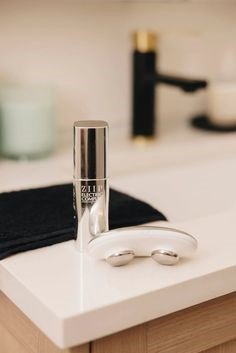
I can see the appeal for someone who already enjoys skincare devices and wants something more sophisticated than a basic facial massager.
It’s particularly interesting for people who like guided routines, app-based personalization and electrical facial treatments.
It also makes sense for someone who wants a premium device that can provide different treatment programs without purchasing several separate electrical tools.
But I wouldn’t recommend it simply because it’s expensive or technologically impressive.
If you’re only interested in basic facial massage, this is probably unnecessary.
If you’re specifically looking for LED therapy, a dedicated LED device makes more sense.
And if microcurrent is your only priority, it’s worth comparing HALO directly with dedicated microcurrent devices before spending around $400.
So… Is ZIIP HALO Worth the Hype?
The ZIIP HALO is one of those skincare devices that becomes more interesting the longer you look at it.
At first glance, it’s simply another premium microcurrent facial tool.
Then you look closer and realize that its real selling point is the combination of microcurrent, nanocurrent, multiple waveform programs and an app that turns the hardware into a much larger treatment system.
That is also where the potential downside lives.
You’re paying for a premium device, conductive products and an ecosystem that works best when you’re willing to engage with it.
For the right person, that could be exactly what makes HALO appealing.
For someone who wants a simple skincare routine, it may be technology for technology’s sake.
The most reasonable way to view it is not as a miracle device or a replacement for professional treatments.
It’s a premium at-home beauty tool designed to make electrical facial treatments more structured, customizable and easier to repeat.
And honestly, that is already a pretty interesting proposition.
FAQ
What is the ZIIP HALO?
ZIIP HALO is an at-home facial device that uses different electrical waveforms, including microcurrent and nanocurrent. ZIIP says the device is designed around different visible skincare concerns and can be paired with its app for guided treatments.
Does ZIIP HALO require the app?
Not completely. The device has a built-in 4-Minute Facial that can be used without the app. For other treatments and treatment plans, ZIIP recommends using the ZIIP Beauty App, which connects to the device through Bluetooth.
How often should you use ZIIP HALO?
ZIIP currently recommends using HALO 3–5 times per week, with a maximum of six times per week when following a short-term intensive treatment plan.
Does ZIIP HALO use microcurrent?
Yes. Microcurrent is one of the main technologies used by ZIIP HALO. The device also incorporates nanocurrent and different electrical waveforms designed for specific visible skincare concerns.
What is the 4-Minute Facial?
The 4-Minute Facial is a pre-programmed treatment built into ZIIP HALO. It uses both microcurrent and nanocurrent and allows users to use the device without connecting to the app.
Does ZIIP HALO need conductive gel?
Yes. ZIIP’s product system includes conductive gels designed for use with its electrical facial devices. The current HALO package includes gel samples, while additional gels are available separately.
What does ZIIP HALO claim to do?
ZIIP says its different waveforms are designed to improve the appearance of concerns including firmness, fine lines, skin tone and clarity. The company currently publishes clinical-test figures including a 28% reduction in the appearance of wrinkles and fine lines and a 27% improvement in the appearance of elasticity. These are manufacturer-reported results, not guarantees for every user.
Has ZIIP HALO been clinically tested?
ZIIP publishes details of a clinical study in which participants used HALO on clean, dry skin with gel over a 42-day period. The company reports measurements involving imaging, skin elasticity testing, dermatologist grading and participant assessments. Because these results are published by the manufacturer, they should be understood as manufacturer-reported evidence rather than independent testing conducted by Anayzas.
Can you use ZIIP HALO without a phone?
Yes. The built-in 4-Minute Facial works without the app. However, ZIIP says the app is needed for its other treatment programs and guided routines.
Is ZIIP HALO worth it?
It depends on what you want from a skincare device. HALO makes the most sense for someone interested in microcurrent, nanocurrent and guided treatment programs and willing to maintain a regular routine. If you only want a basic facial massage or LED treatment, a simpler or more specialized device may make more sense.
Editorial note: This review is based on ZIIP’s published product information, user guidance, manufacturer-reported clinical testing, independent editorial testing, and available manual information. Anayzas has not independently laboratory-tested the device and does not guarantee individual cosmetic results. Product specifications, prices, availability, and manufacturer instructions can change, so readers should check the current manufacturer’s information before purchasing or using the device.@Web search provide images for above post will i add it in post also guide