
Uncover how collagen changes after age 25, what affects fibroblast activity, and how long-term skin structure evolves over time.
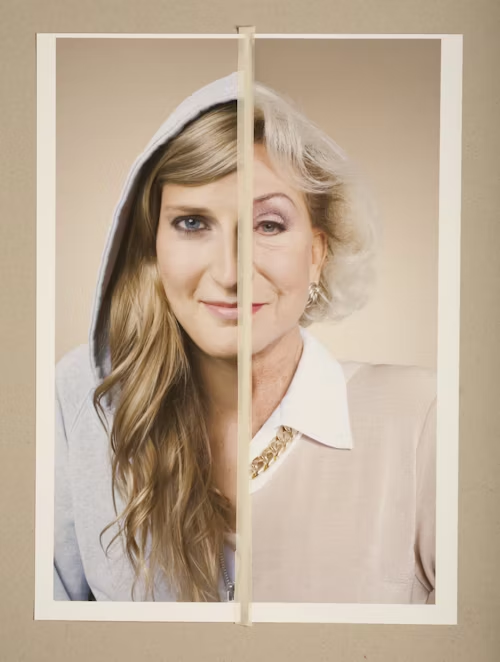
Collagen Loss After 25: What Actually Happens Beneath the Skin Surface
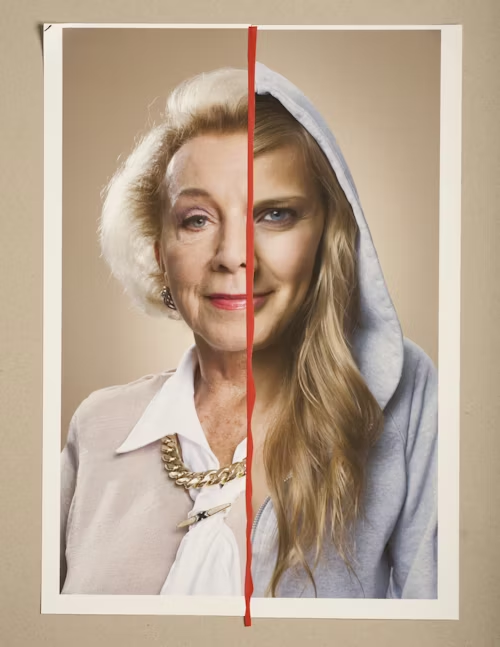
Collagen is the most abundant structural protein in human skin and plays a major role in maintaining firmness, strength, and resilience. It forms a supportive framework that helps skin maintain its shape and smooth appearance. During early adulthood, collagen production naturally begins to slow as part of the body’s normal aging process. While these changes start gradually, they influence how the skin maintains elasticity and repairs itself over time. Understanding how collagen behaves beneath the skin surface helps explain why long-term skin health depends more on consistent care and protection than quick cosmetic fixes.Collagen decline does not begin with wrinkles — it begins with reduced signaling between skin cells. By the mid-20s, collagen production gradually slows, but visible changes appear much
Understanding collagen behavior helps shift skincare from reaction to prevention
What Collagen Really Does
Collagen provides:
- Structural firmness
- Dermal thickness
- Elastic support foundation
Collagen fibers are located mainly in the dermis, the deeper layer of the skin responsible for strength and structural support. Within this layer, collagen forms a dense network that works together with elastin and other connective components. This network acts much like scaffolding in a building, helping the skin maintain its firmness and shape. Elastin provides flexibility while collagen provides strength, allowing skin to stretch and return to its normal form. When collagen levels gradually decline, this supportive framework becomes weaker, which can eventually contribute to visible signs of aging such as reduced firmness and fine lines.It exists in a matrix supported by elastin and glycosaminoglycans.
Why Collagen Declines
Collagen reduction is influenced by:
- Natural aging cycles
- UV-induced degradation
- Oxidative stress
- Chronic inflammation
Fibroblasts become less responsive over time, reducing repair efficiency.
Environmental Factors That Accelerate Collagen Breakdown
In addition to natural aging, several environmental factors can accelerate collagen breakdown. Prolonged sun exposure is one of the most significant influences, as ultraviolet radiation can damage collagen fibers and reduce their stability over time. Air pollution may also contribute to oxidative stress within the skin, which can gradually weaken structural proteins. Lifestyle habits such as smoking have been linked to reduced oxygen delivery and increased free-radical activity, both of which can negatively affect skin repair processes. Chronic stress may also influence inflammation levels in the body, indirectly affecting how efficiently the skin maintains its structural components.
Collagen vs Hydration: Not the Same
Hydrated skin may appear plump, but hydration does not replace structural collagen.Temporary fullness differs from long-term support Hydrating products and moisturizers can improve the surface appearance of the skin by helping it retain water and appear smoother. However, this effect mainly occurs in the outer layers of the skin. Collagen fibers exist deeper in the dermis, where they provide structural strength rather than surface hydration. While well-hydrated skin may temporarily look plumper or more radiant, hydration alone cannot rebuild or replace damaged collagen fibers. Maintaining both hydration and long-term structural support requires a balanced skincare approach that addresses multiple aspects of skin health.
Supporting Collagen Through Skin Environment Stability
Healthy collagen maintenance aligns with:
- Barrier integrity
- UV consistency
- Inflammation reduction
- Gentle renewal cycles
Collagen health is cumulative.
Can Collagen Production Be Stimulated?
Many skincare ingredients aim to support the environment in which collagen is produced. For example, retinoids are widely studied compounds that may encourage skin cell renewal and support collagen activity over time. Antioxidants such as vitamin C can help protect collagen fibers from oxidative stress caused by environmental factors. Consistent sun protection also plays a crucial role because ultraviolet radiation is one of the main causes of collagen degradation. While these strategies do not instantly rebuild collagen structures, they help create conditions that allow the skin to maintain healthier structural proteins over the long term.
Realistic Timeline of Structural Change
- Subtle density shifts: Late 20s
- Elasticity reduction: 30s
- Visible firmness change: 40s+
Although these timelines provide general patterns, the speed of collagen change varies from person to person. Genetics can influence how quickly structural proteins decline, while lifestyle habits also play an important role. Consistent sun protection, balanced nutrition, and supportive skincare routines can slow environmental stress on collagen fibers. Over time, these daily habits help preserve the skin’s structural integrity and reduce the rate at which visible changes appear.
Internal Learning Path
- Skin aging mechanisms
- Inflammation and collagen breakdown
- Barrier preservation science
Consistent UV protection plays a major role in protecting collagen structure.
Long-Term Skin Structure Is Built Over Time
Collagen changes happen gradually over many years rather than appearing suddenly. Because of this slow process, long-term skin care habits play a major role in maintaining structural support. Daily sun protection, balanced skincare routines, and minimizing environmental stress can help protect the collagen network beneath the skin. Prevention is often more effective than attempting to reverse damage later. By supporting the skin consistently, it is possible to maintain healthier structure and resilience throughout different stages of life.
Editorial Disclosure
Educational content reflecting current dermatological understanding of structural skin aging.