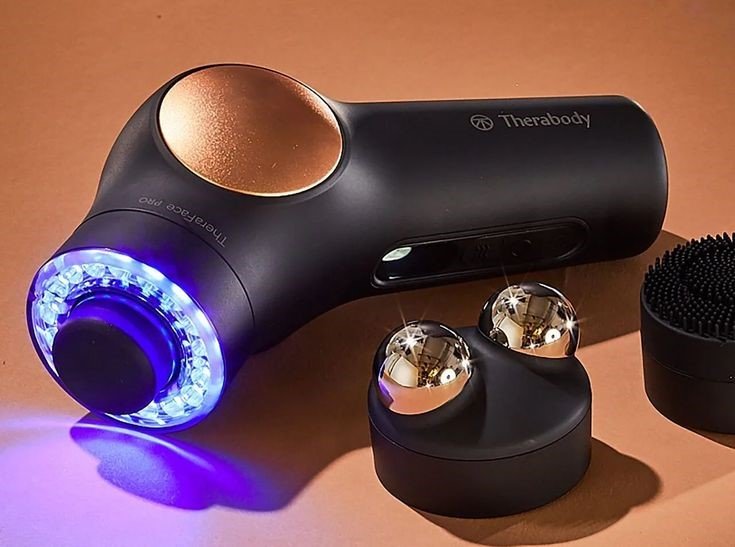
The TheraFace PRO combines LED light therapy, microcurrent, facial massage, cleansing, heat, and cold in one handheld device. See what each attachment actually does and whether this premium skincare gadget makes sense for your routine.
One Device, Several Skincare Modes, One Big Question
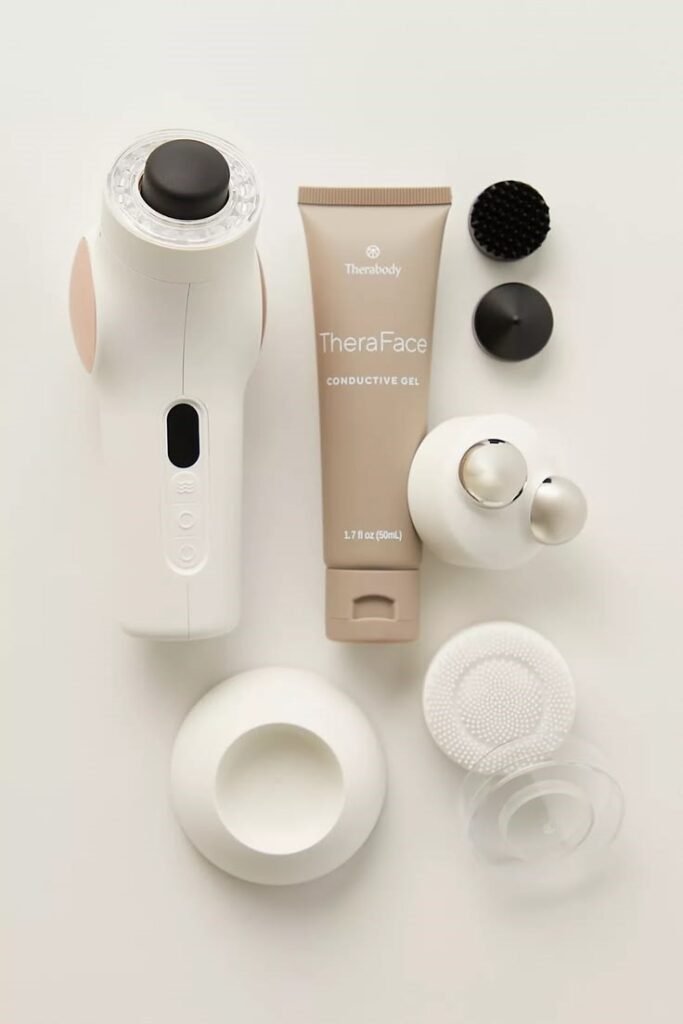
The TheraFace PRO is the kind of skincare gadget that makes you stop and look twice.
It isn’t simply an LED wand. It isn’t just a facial massager. It isn’t only a cleansing device either.
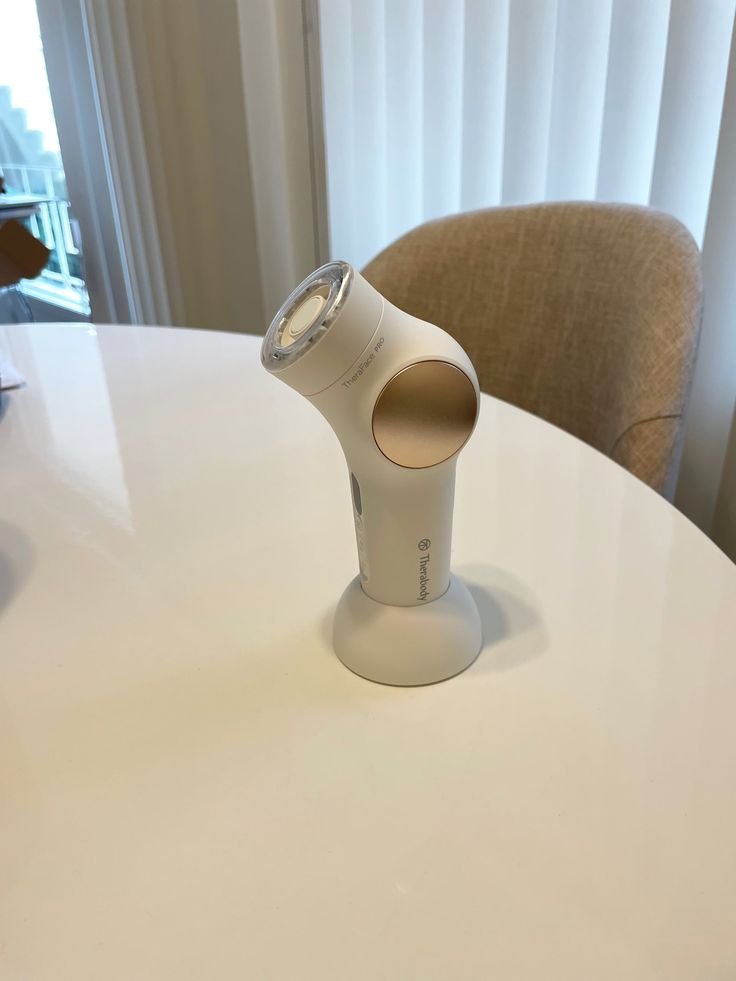
Therabody built the TheraFace PRO as a multi-function facial platform that combines percussive therapy, microcurrent, LED light therapy, and cleansing, while separate hot and cold rings can add thermal treatments. The standard package includes three percussive attachments, a microcurrent ring, an LED ring with red, blue, and infrared light, a cleansing ring, conductive gel, a stand, and a charging cable.
That sounds like a lot because it is.
The real question isn’t whether the device has plenty of features. It clearly does.
The more interesting question is whether putting so many treatments into one handheld device makes your skincare routine genuinely better—or simply gives you a very expensive gadget with a lot of buttons.
That’s what makes the TheraFace PRO worth looking at more carefully.
It Feels More Like a Skincare Toolkit Than a Single Gadget
Most beauty devices have one obvious job.
A cleansing brush cleans.
An LED mask provides light therapy.
A facial massager gives you massage.
The TheraFace PRO takes a different route: one handle, interchangeable treatment heads, several types of technology.
The standard device is listed at 112 g, measures about 6 by 1.5 inches, offers a stated 38-minute battery life, and comes with a one-year limited warranty on Therabody’s U.S. product page.
Those numbers make it relatively compact for what it is, but the more important practical point is that you are expected to switch attachments depending on what you want to do.
That makes the device feel much closer to a personal skincare toolkit than a single-purpose machine.
For someone who already enjoys facial routines, that can be a real advantage.
For someone who wants something they can put on their face for two minutes and forget about, it may feel like overkill.
The LED Ring Is More Specific Than “Seven Colors of Beauty”
The LED attachment is one of the easiest parts of the TheraFace PRO to understand because Therabody publishes its wavelengths.
The manual identifies approximately 633 nm red light, 830 nm infrared light, and 415 nm blue light.
That technical information matters because “LED therapy” is not one single treatment.
Red and near-infrared light are commonly studied for skin-aging concerns. The American Academy of Dermatology notes that at-home red-light devices can produce subtle to noticeable improvements in areas including fine lines, wrinkles, rough-feeling skin, redness, discoloration, and loose skin, while also emphasizing that different devices and treatment protocols make results difficult to compare directly.
Blue light is more closely associated with acne-related applications. The AAD notes that some at-home visible-light devices use blue, red, or combined blue-and-red light for pimples, but visible light does not treat blackheads, whiteheads, cysts, or nodules.
So the TheraFace PRO’s LED ring isn’t interesting simply because it has multiple colors.
It’s interesting because the manufacturer actually tells you which wavelengths those modes use.
That is the kind of specification I want to see on a premium beauty device.
If you’re mainly interested in dedicated light therapy rather than a multi-function device, our guide to LED light therapy masks for home skincare looks more closely at wavelengths, treatment schedules, comfort, and what to check before buying.
The Microcurrent Ring Changes the Experience Completely
The microcurrent attachment moves the TheraFace PRO into a different category.
Instead of light, you’re using electrical stimulation designed for facial and neck treatment.
Therabody says the microcurrent ring is intended to gently stimulate muscles to firm, plump, and tighten the appearance of skin while contouring and toning the face and neck.
The important practical detail is that conductive gel is required.
The user manual instructs you to apply a layer of conductive gel to the treatment area before using the microcurrent ring. It also states that the treatment has a preset eight-minute shutoff and provides three intensity levels.
That requirement is easy to overlook when looking at product photos.
You aren’t supposed to pick up the ring and use it like a dry facial roller.
You need the conductive layer, both contact points need to stay on the skin, and the device should be moved slowly with light to medium pressure.
That makes microcurrent the mode that requires the most attention to technique.
Then There Is the Percussive Side
This is probably the feature that makes the TheraFace PRO feel unmistakably like a Therabody product.
The device includes three percussive attachments: Cone, Micro-Point, and Flat.
Percussive treatment on the face is a very different experience from simply massaging with your hands. Instead of applying steady pressure, the attachment delivers repeated mechanical movement.
An independent WIRED review described the device as easy to use and particularly noted the versatility of combining its percussive attachments with LED treatment.
That combination is part of what makes the design interesting.
You’re not necessarily choosing between “massage” and “LED.”
The device is designed so certain treatment modes can work together within the same routine.
That said, more stimulation is not automatically better for every face.
Gentle technique still matters, especially around delicate areas.
The Cleansing Ring Gives It a More Everyday Role
The cleansing attachment is probably the least glamorous part of the device—and possibly one of the most practical.
Unlike the LED and microcurrent systems, cleansing isn’t something you usually have to convince yourself to do.
It’s already part of the routine.
Adding a cleansing attachment means the TheraFace PRO isn’t only something you bring out when you’re specifically doing a treatment. It can also become part of a normal skincare session.
That can make an expensive device feel more useful over time.
A device that performs one impressive treatment once a week is one thing.
A device that genuinely fits into several parts of your routine is another.
If pore-focused cleansing is your main priority, our DERMAPORE+ ultrasonic pore tool review takes a closer look at ultrasonic extraction, Infuse mode, and how the device fits into a facial routine.
The Heat and Cold Features Are a Bonus, Not the Main Event
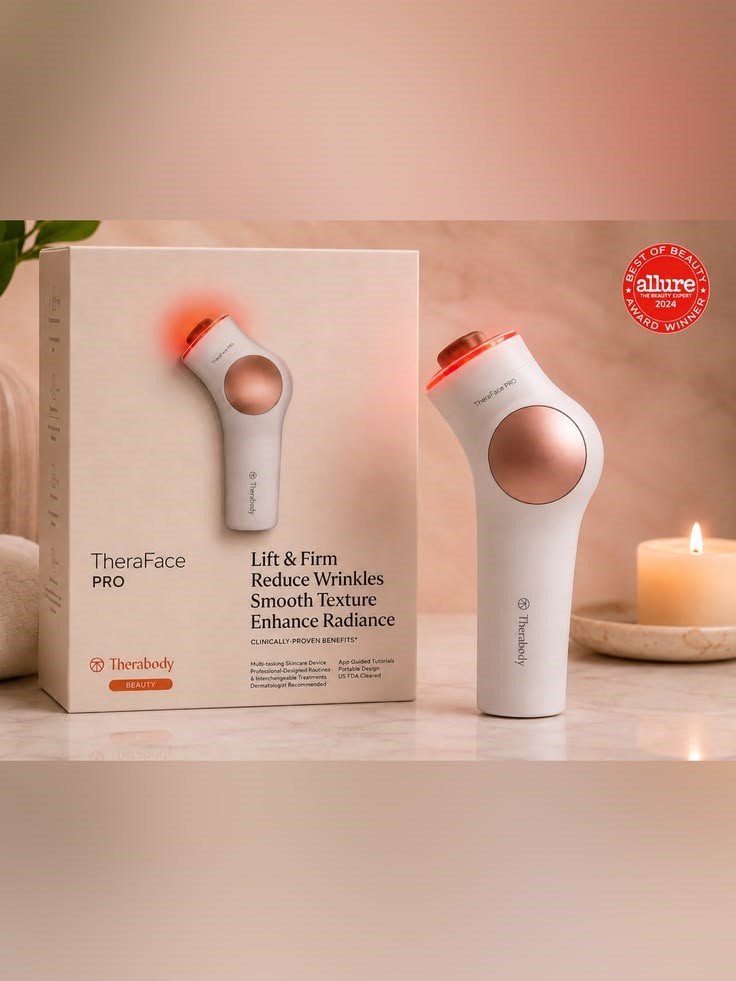
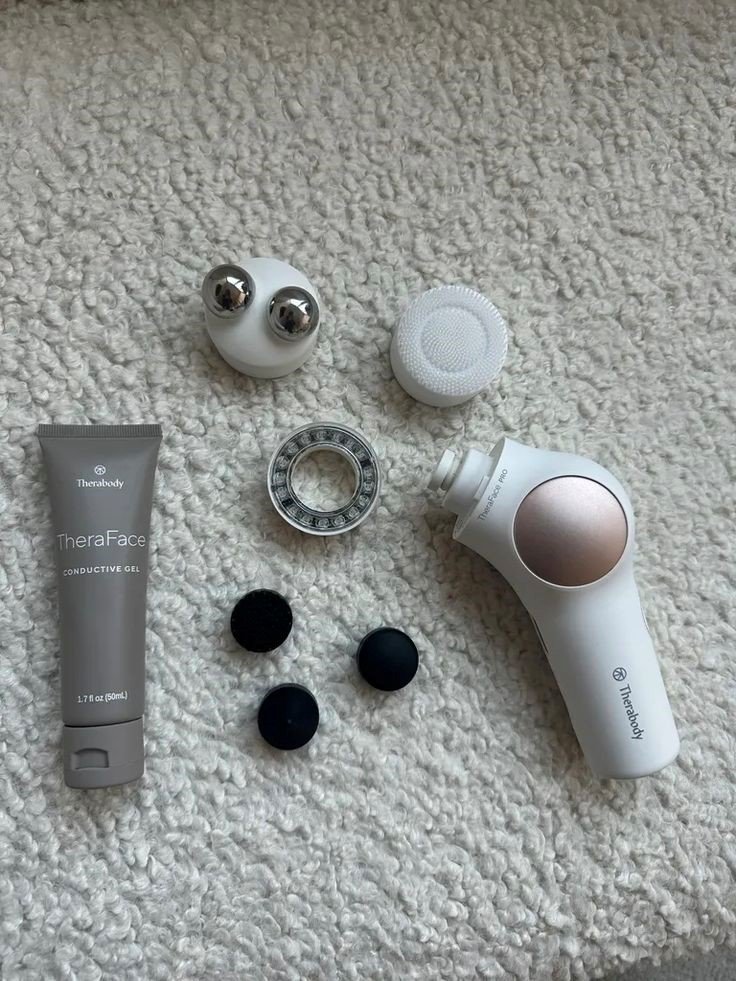
Therabody also offers Hot and Cold Rings, sold separately, for the TheraFace PRO. The company positions heat as helping skincare products absorb better and boosting radiance, while cold therapy is marketed for reducing puffiness and sealing in skincare products after application.
This is where I’d keep expectations especially realistic.
Heat and cold can make a facial routine feel more luxurious, but that doesn’t mean either feature should be treated as a substitute for proven skincare treatments.
For many people, the appeal is simply the experience.
A warm treatment can feel relaxing.
A cool treatment can feel refreshing, particularly when the face feels puffy after waking up.
That is useful—but it’s different from claiming permanent changes to the structure of your skin.
The Manufacturer’s Study Is Interesting, But Read the Fine Print
Therabody has published a 12-week clinical study involving 35 participants who completed the study, with participants between 25 and 61 years old and representation across Fitzpatrick skin types I–IV. The weekly protocol combined different TheraFace PRO modalities across the week rather than testing just one attachment in isolation.
The company’s study materials report improvements in measures such as firmness, elasticity, skin tone evenness, texture, fine lines, facial contour, and radiance. For example, the study document reports that 97% of participants showed a reduction in wrinkles around the eyes and 97% showed an increase in firmness.
But there is an important detail that shouldn’t get lost.
This was a company-associated 35-subject study, and the protocol used several modalities across the 12-week period. That means you should not interpret the results as proof that one individual attachment alone will produce those outcomes.
Therabody itself notes that individual results may vary.
For me, that’s the right way to read the research: encouraging, interesting, worth examining—but not a guarantee.
The Weekly Routine Is More Involved Than It Looks
The published study protocol gives a good idea of how seriously the device is intended to be used.
The study schedule included six-minute sessions combining percussive and LED treatment on Monday, Wednesday, and Friday; cleansing and microcurrent on Tuesday and Thursday; microcurrent on Saturday; and a longer Sunday session combining multiple modalities.
That tells you something important.
The TheraFace PRO isn’t really designed around the idea of “use it whenever you remember.”
The technology is more meaningful when it becomes a consistent routine.
That can be a positive if you genuinely enjoy skincare rituals.
It can also be a downside if you tend to buy beauty gadgets because they look exciting and then stop using them after two weeks.
The smartest question is not “How many treatments does it have?”
It’s “Will I actually use those treatments?”
The Premium Price Needs a Real Reason
The TheraFace PRO sits firmly in the premium beauty-device category. Therabody’s current U.S. product page lists the device at $419.99.
At that price, you are paying for more than one technology.
You’re paying for a multi-function system, interchangeable attachments, engineering, accessories, the brand’s ecosystem, and the convenience of having several facial treatments in one device.
That makes it difficult to call the product “cheap” or even “budget-friendly.”
But price alone doesn’t tell you whether it’s a good buy.
For someone who would otherwise purchase several separate devices or regularly pay for facial treatments, a multi-function device may be easier to justify.
For someone mainly interested in red-light therapy, buying a dedicated LED device could make more sense.
For someone primarily interested in facial massage, a simpler massager may be enough.
This is one of those products where feature count should not be confused with personal value.
For a more affordable multi-function option, our guide to the 7-color LED facial massager for face and neck looks at how LED light, vibration, heat, and microcurrent-style features are combined in a smaller beauty device.
The Safety Instructions Are Not Optional Reading
This deserves more attention than the marketing usually gets.
Therabody’s manual contains specific precautions and contraindications for the different treatment modes.
For example, the company says the microcurrent ring requires conductive gel and should not be used directly over the midline of the neck or around the eye area. It also lists situations requiring medical consultation or avoidance, including certain heart conditions, pacemakers or other implanted electronic devices, epilepsy, pregnancy, tumors, and recent procedures.
The LED precautions are different. The manual warns against direct application to the eyeball or eyelid and lists concerns involving light sensitivity, certain medications, melasma or hyperpigmentation, and other conditions.
Therabody also advises waiting until skin has fully healed after procedures such as fillers, microneedling, laser treatments, or chemical peels before using the relevant treatment modes.
That’s not a reason to avoid the device.
It’s a reason to read the instructions for the exact mode you’re using.
A premium beauty device is still an electronic treatment device, and “at home” does not mean “no precautions needed.”
The LED Part Has One More Caveat
The American Academy of Dermatology points out that at-home red-light devices are generally less powerful than professional systems and that although short-term safety appears favorable, questions remain about long-term effects and optimal treatment parameters.
The AAD also recommends discussing at-home red-light therapy with a dermatologist if you have a condition that can be aggravated by light, take photosensitizing medication, or have concerns about whether the treatment is appropriate. It specifically recommends following the manufacturer’s eye-protection instructions when applicable.
That makes one thing very clear:
Don’t treat the LED ring as an excuse to experiment with more sessions, higher intensity, or completely different schedules.
Follow the device’s own protocol.
It Is Surprisingly Easy to Keep the Routine Organized
One thing I like about this design on paper is that the attachments have clear roles.
Cleansing gives you a straightforward routine step.
LED handles light-based treatment.
Microcurrent adds electrical stimulation.
Percussive attachments bring massage into the routine.
Hot and cold rings add optional thermal treatment.
That separation is useful because you’re not relying on one mysterious “beauty mode” that supposedly does everything at once.
You know what you’re selecting.
And that makes it easier to decide whether a particular feature is actually relevant to you.
The Real Downsides Are Mostly About Complexity
The more capable the device becomes, the more complicated the routine can become.
There are different attachments to store.
There is conductive gel for microcurrent.
There are different safety requirements.
There are multiple treatment schedules to understand.
And because the device tries to do so much, it can be tempting to use every feature simply because you paid for them.
That isn’t necessarily the smartest approach.
Your skin doesn’t need every treatment just because the device can provide it.
Sometimes a six-minute routine is more useful than a 45-minute technology marathon.
Where I Think TheraFace PRO Makes the Most Sense
I’d look at this device most seriously if you are already interested in several categories of facial technology.
If you want LED, microcurrent, massage, and cleansing in one ecosystem, the TheraFace PRO has a strong argument.
If you only want one of those things, the price becomes harder to justify.
That’s the difference between buying a multi-tool and buying a specialist tool.
A multi-tool wins when you genuinely need multiple functions.
A specialist wins when you know exactly what you want.
The Face Device That Tries to Do Almost Everything
And that’s really my biggest takeaway from the TheraFace PRO.
It doesn’t win because it has one magical feature.
It wins because Therabody has tried to make a whole facial-treatment routine fit into one handheld system.
The company gives you established light wavelengths, a dedicated microcurrent attachment, multiple percussive heads, a cleansing ring, and optional thermal attachments. It also provides a detailed manual and a published 12-week study rather than hiding everything behind vague marketing language.
That doesn’t mean every claim should be accepted without question.
It means the product gives you enough information to make a more informed decision.
For someone who genuinely enjoys advanced skincare technology and will use several of its functions, the TheraFace PRO is one of the more ambitious all-in-one facial devices available.
For someone who simply wants an LED treatment or an occasional facial massage, it may be more technology—and more money—than necessary.
The smartest way to look at it is not “Does this device do everything?”
It clearly tries to.
The better question is:
“Will I actually use enough of what it does to make the price worthwhile?”
Frequently Asked Questions
What treatments are included with TheraFace PRO?
The standard TheraFace PRO package includes three percussive attachments, a microcurrent ring, an LED ring with red, blue, and infrared light, a cleansing ring, conductive gel, a stand, a carrying bag, and a charging cable. Hot and cold rings are sold separately.
What LED wavelengths does TheraFace PRO use?
Therabody’s manual specifies approximately 633 nm red light, 830 nm infrared light, and 415 nm blue light for the LED ring.
Does the TheraFace PRO use microcurrent?
Yes. It includes a dedicated microcurrent ring. Therabody requires a conductive gel for the treatment and provides three intensity levels.
How long does the battery last?
Therabody currently lists approximately 38 minutes of battery life for the device.
Can I use the microcurrent ring without conductive gel?
No. Therabody’s instructions state that a microcurrent conductive primer is required before treatment.
Is the TheraFace PRO safe for everyone?
No. The manufacturer lists several contraindications and precautions that vary by treatment mode. People with certain heart conditions, implanted electronic devices, epilepsy, pregnancy, light-sensitive conditions, recent procedures, or other listed medical concerns should consult a medical professional or follow the relevant contraindication guidance before use.
Is TheraFace PRO FDA approved?
Be careful with that wording. “FDA cleared” and “FDA approved” are not interchangeable terms for medical devices. The American Academy of Dermatology explains that “FDA-cleared” means the FDA considers a device low risk, but clearance does not establish that the device will be effective for every advertised purpose.
Is the TheraFace PRO worth it?
It depends on how many of its functions you will actually use. If you want several facial technologies in one device, the versatility can make the premium price more reasonable. If you only want one treatment, a dedicated device may offer better value
Editorial Note
This article is a researched review rather than a hands-on review because you have not said that you personally used TheraFace PRO. The product specifications and manufacturer study have therefore been attributed to Therabody, while independent context comes from sources such as the American Academy of Dermatology and WIRED. That distinction keeps the article transparent and avoids presenting manufacturer claims as personal experience.