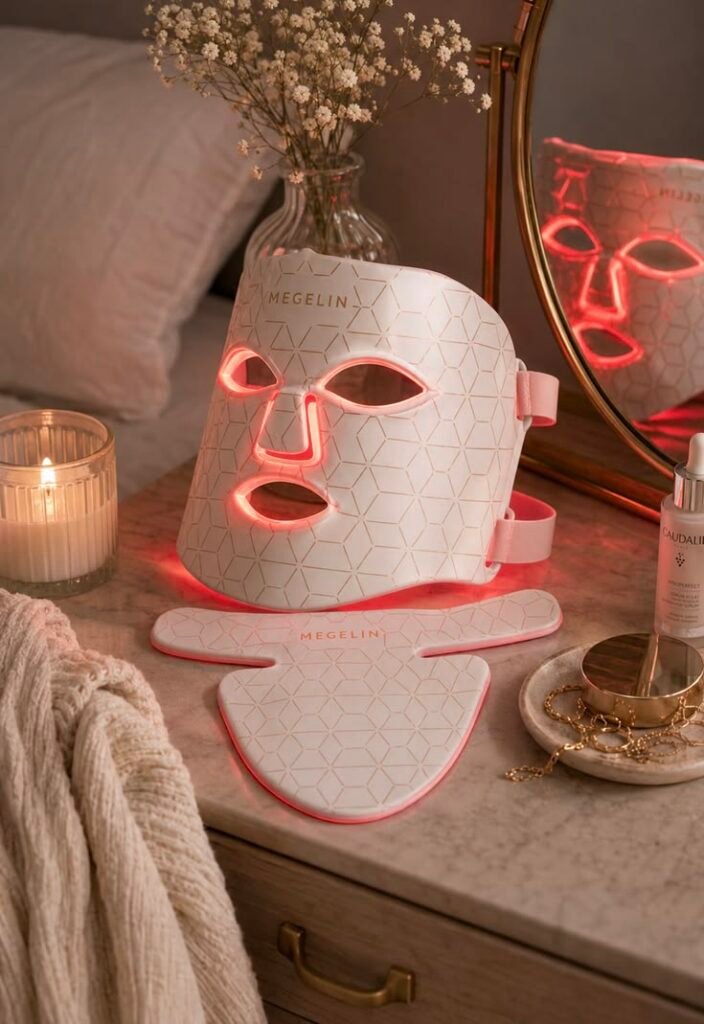
Thinking about trying an LED light therapy mask at home? This 2026 guide explains red, blue, and near-infrared light, important safety features, comfort, treatment schedules, and what to look for before buying.
Why LED Light Therapy Masks Are Getting So Much Attention in 2026
LED light therapy masks have moved from being a niche beauty gadget to a familiar part of at-home skincare routines. You can now find flexible masks, rigid face devices, handheld LED tools, and combination-light systems designed for different skincare concerns.
The appeal is easy to understand. Instead of adding another complicated product to your shelf, an LED mask offers a technology-based step that can be built into a regular routine from home.
But there is a catch.
Not every LED mask is designed in the same way, and a higher price does not automatically mean better results. Different devices use different wavelengths, treatment times, light configurations, and safety features. Some are designed around red or near-infrared light, while others combine red and blue light for different intended uses.
That is why choosing an LED mask should involve more than asking, “Which one is the most popular?”
The better question is: Does this particular device make sense for my skincare goal, and does the manufacturer provide enough information to use it properly?
Research into light-based skincare is promising, but results can vary between devices and treatment protocols. The American Academy of Dermatology notes that at-home red-light devices can produce some improvements in concerns such as fine lines, wrinkles, rough-feeling skin, redness, and discoloration, while also emphasizing that more research is needed to determine the most effective treatment parameters for home use.
That makes product selection especially important.
A Few Minutes of LED Therapy Can Fit Easily Into a Busy Routine

The biggest attraction of an LED mask is convenience.
Traditional professional light treatments usually require a visit to a clinic or dermatologist. An at-home device, by comparison, can be used while you are following your normal evening routine, reading, or simply relaxing.
There is also growing interest in non-invasive skincare technologies. LED devices do not use needles or abrasive treatments, and many consumer masks are designed to be used repeatedly rather than as a one-time treatment.
The technology itself is also becoming easier for shoppers to understand. Modern devices commonly identify the wavelengths they use and provide a recommended treatment schedule, making it easier to compare products than it was with some earlier beauty gadgets.
Still, convenience should not be confused with guaranteed results.
The American Academy of Dermatology explains that dermatologist-used red-light systems are generally more powerful than at-home devices, and dermatologists often use red light as a complementary part of a wider treatment plan rather than as a replacement for standard skincare.
That distinction is worth remembering before buying an expensive mask.
The Light Reaches the Skin Differently Than Your Everyday Skincare Products
LED skincare is based on exposing the skin to specific wavelengths of visible or near-infrared light.
Unlike ultraviolet light, red and near-infrared light used in photobiomodulation do not work by deliberately damaging the skin. Instead, the light interacts with cells and is being studied for effects on cellular activity and skin appearance. Research reviews have found encouraging results for several applications, although researchers also emphasize that more well-controlled studies are needed and that different devices and treatment protocols cannot always be compared directly.
For consumers, the important point is simple: the wavelength matters.
A device labeled “LED therapy” is not automatically equivalent to another device with the same label. Two masks may use different light combinations, different treatment times, and different output levels.
That is why a good buying decision starts with understanding what the light is intended to do rather than focusing only on the number of LEDs.
Not Every LED Color Is Designed to Do the Same Thing
Red Light
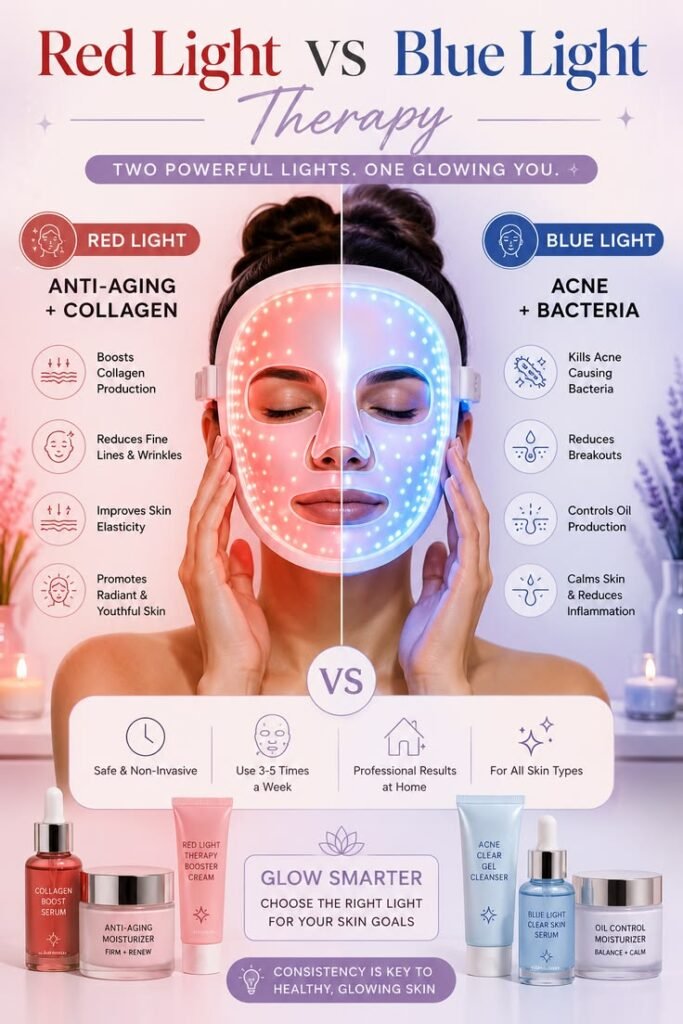
Red light is commonly associated with skincare concerns involving visible signs of aging and overall skin appearance.
Research and dermatology guidance suggest that red-light LED devices may provide improvements in areas such as fine lines, wrinkles, rough-feeling skin, redness, and some discoloration, although the degree of improvement can vary and is usually not comparable to an overnight transformation.
This makes red light particularly interesting for people building a long-term skincare routine rather than looking for an instant change.
Blue Light
Blue light is commonly used in LED devices designed for acne-related concerns.
Some FDA-cleared LED devices specifically use blue light, alone or in combination with other wavelengths, for mild to moderate inflammatory acne.
However, shoppers should check the actual intended use of the specific device rather than assuming that every blue-light mask has the same indication.
Near-Infrared Light
Near-infrared light is invisible to the eye and is included in some LED devices alongside visible red light.
It is frequently discussed in relation to photobiomodulation and skin-rejuvenation applications. However, the exact performance of a device depends on its wavelength, dosage, treatment schedule, and design, so “near-infrared” alone is not enough information to judge a mask.
For that reason, a transparent manufacturer should provide meaningful technical information rather than simply advertising a mask as having “advanced infrared technology.”
The Details on the Product Page Matter More Than the Design
A good-looking mask can be tempting, especially when product photos make it look futuristic. But appearance should be near the bottom of your checklist.
Check the Wavelength Information
A trustworthy product page should clearly state which wavelengths the device uses and what each mode is intended to address.
Be cautious when a listing simply says “full-spectrum LED” or “7-color therapy” without explaining the purpose of each light setting.
More colors do not automatically mean more useful treatment.
Look at the Treatment Schedule
A device that requires a short, manageable session may be easier to use consistently than one requiring a complicated routine.
Read the manufacturer’s recommended frequency and treatment duration before buying. Research on home-use photobiomodulation has involved repeated applications, which reinforces the importance of following a consistent protocol rather than expecting a single session to make a major difference.
Consider How the Mask Fits
Comfort matters more than many buyers realize.
If a mask feels heavy, presses uncomfortably around the nose, slips while you are moving, or makes it difficult to sit comfortably, you may stop using it.
A device that you can realistically use several times a week may be more valuable than a premium-looking mask that stays inside its box.
Check Eye Protection and Safety Instructions
This should never be an afterthought.
Follow the manufacturer’s instructions about eye protection. The American Academy of Dermatology specifically recommends using the protective eyewear supplied or recommended by the manufacturer when the instructions call for it, rather than improvising with ordinary sunglasses.
Also read the warnings before buying, particularly if you have a medical condition, use photosensitizing medication, or have concerns about whether light therapy is appropriate for you.
Look Beyond “FDA Approved” Marketing
This is an important detail when comparing devices.
You may see terms such as “FDA-cleared,” “FDA-approved,” or “FDA-certified” in product marketing. The terminology matters. The American Academy of Dermatology explains that for medical devices, “FDA cleared” is the relevant language; “FDA approved” or “FDA certified” can be misleading when used as generic marketing terms. Clearance also does not guarantee that a product will deliver a specific level of effectiveness.
So rather than buying because a listing contains the words “FDA,” look at exactly what the device is cleared for and whether that intended use matches your goal.
Check the Warranty and Manufacturer Support
An LED mask is an electronic device, not simply another skincare product.
Before buying, check whether the company provides a warranty, charging information, replacement options, clear instructions, and a real customer-support channel.
These details become especially important if the device develops charging problems or you need replacement accessories later.
The Right Mask Depends on What You Want to Improve
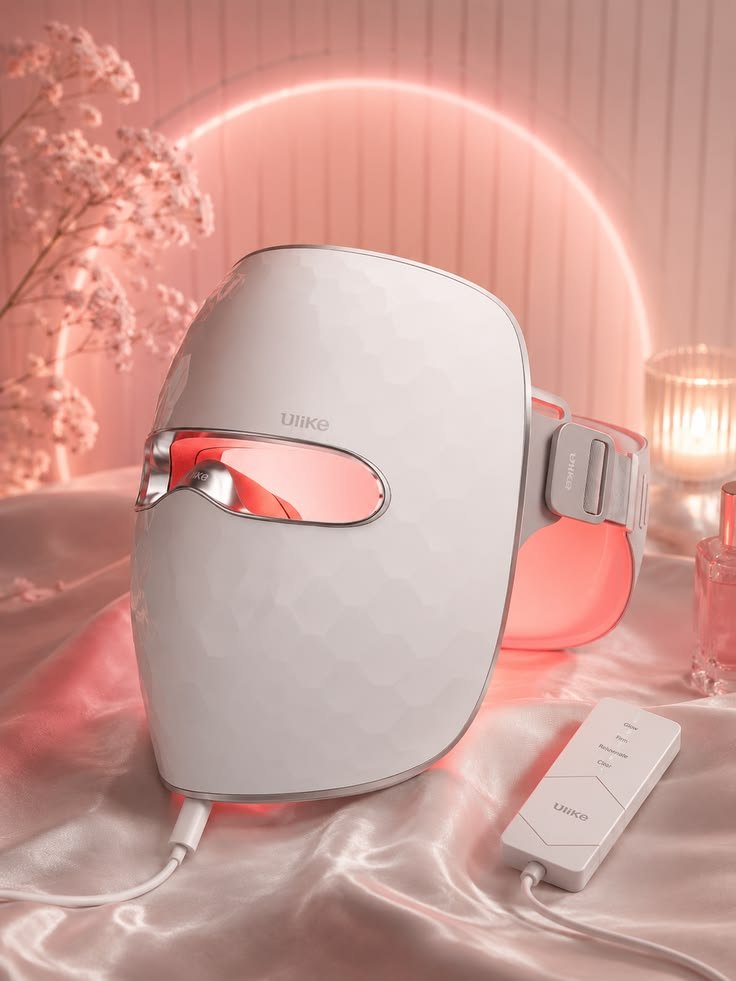
An LED mask can make sense for someone who wants to add a simple, non-invasive technology step to an existing skincare routine. The best candidate depends on the device’s intended use rather than the popularity of the mask.
Red-light devices are commonly marketed for concerns such as fine lines, wrinkles, rough-feeling skin, redness, discoloration, and other visible signs of aging. At-home devices can be useful, but they are generally less powerful than professional systems, and results vary from person to person.
For acne-prone skin, some at-home LED devices use blue light or a combination of blue and red light. However, light therapy is not a universal acne solution, and different forms of acne respond differently. The American Academy of Dermatology notes that visible-light devices can help with pimples but are not effective for blackheads, whiteheads, cysts, or nodules.
That is why it is better to choose a device based on a specific skincare goal rather than simply buying the mask with the largest number of LEDs or light settings.
Consistency Matters More Than Trying to Use It Every Day
One of the easiest mistakes to make is assuming that more sessions will automatically produce better results.
LED masks are designed around specific treatment schedules, and those schedules vary between products. Some devices recommend short sessions several times per week, while others have different protocols. The safest approach is to follow the instructions supplied with the particular device rather than creating your own schedule.
Consistency is generally more realistic than excessive use. Dermatology guidance also emphasizes that red-light treatments are not a one-time procedure and that results can take time to become noticeable.
Think of an LED mask more like a routine than a quick fix. Taking a few minutes for a treatment on a regular schedule is more sensible than using it repeatedly in one day because you want faster results.
LED Therapy Is Better Viewed as a Gradual Skincare Step
This is where LED-mask marketing can sometimes create unrealistic expectations.
You should not buy an LED mask expecting your skin to look dramatically different after one session. Research has found encouraging results for some skin concerns, but studies use different devices, wavelengths, treatment schedules, and study designs, making it difficult to predict exactly what an individual will experience from a particular home device.
For red-light devices, possible improvements reported in research and dermatology guidance include smoother-feeling skin, less visible redness, changes in the appearance of fine lines and wrinkles, and improvement in some pigmentation concerns. Results can range from subtle to more noticeable, and not everyone responds in the same way.
For acne-focused LED devices, expectations should be even more specific. Blue or blue-red light may help with pimples, but it should not be treated as a complete replacement for an appropriate acne treatment plan.
In other words, an LED mask can be a useful addition to a routine, but it should not be marketed—or understood—as a miracle device.
Understanding how visible signs of aging develop can also help put skincare technology into perspective. Our guide to collagen loss after 25 and changes in skin structure explains what happens beneath the skin surface and why long-term skincare matters.
Some Attractive Features Aren’t as Important as They Look
A little research before purchasing can save you from spending money on a device that eventually sits unused in a drawer.
Choosing Based Only on the Number of LEDs
A large LED count looks impressive on a product page, but the number alone does not tell you whether a device is appropriate or effective for your goal.
Pay more attention to the wavelengths, intended use, treatment schedule, safety information, and manufacturer documentation.
Assuming Every Red-Light Mask Is the Same
Two masks can both advertise red light while using different wavelengths, output levels, treatment times, and designs.
The phrase “red light therapy” describes a category, not a guarantee of identical performance.
Ignoring Comfort
If a mask is heavy, uncomfortable around the nose or eyes, difficult to secure, or awkward to charge, you may stop using it.
Comfort is not just a luxury feature. It can directly affect whether you maintain a consistent routine.
Buying Because of a Viral Before-and-After
Before-and-after images can be useful for understanding how a product is marketed, but they are not enough to prove what you personally will experience.
Lighting, camera settings, skincare routines, treatment length, and individual skin differences can all affect how those photographs look.
Forgetting the Instructions
An LED device is still an electronic skincare tool. Read its instructions before the first use and follow the recommended treatment time, frequency, and safety precautions.
A Higher Price Doesn’t Automatically Make a Better Mask
You do not necessarily need the most expensive LED mask available.
A premium device may offer better materials, improved fit, easier controls, stronger documentation, a longer warranty, or more convenient features. Those things can be valuable, but they do not automatically make the device better for every user.
A lower-priced option can make more sense when it provides clear specifications, sensible safety information, a suitable treatment schedule, and adequate customer support.
The key is to compare what you are actually getting for the price.
Ask yourself whether you are paying for meaningful technology and useful construction—or simply for branding, packaging, and extra features you are unlikely to use.
The Easiest Way to Make LED Therapy Part of Your Routine
An LED mask does not need to turn your routine into a complicated 10-step process.
A simple approach is to follow the device’s instructions and use it on clean skin when recommended. Afterward, continue with the skincare products appropriate for your routine.
The important thing is to avoid treating the LED mask as a replacement for basic skincare.
Daily sun protection remains important, and targeted products such as moisturizers or other skincare treatments may still have a role depending on your needs.
For people using prescription medications or products that can increase photosensitivity, it is especially important to check whether an LED device is appropriate before use.
If you’re also using active ingredients, it’s worth building your routine carefully rather than adding everything at once. Our beginner’s guide to retinol skincare explains how retinol fits into a routine and what beginners should consider.
There Are Situations Where an LED Mask Deserves a Second Thought
An LED mask is not automatically suitable for everyone.
The American Academy of Dermatology recommends discussing at-home red-light therapy with a board-certified dermatologist if you have concerns about a condition that may be affected by light, take medication that increases light sensitivity, or are uncertain whether the treatment is appropriate for you.
People with darker skin tones should also discuss red-light treatment with a dermatologist when appropriate because visible light can increase the risk of hyperpigmentation in some individuals.
Eye protection is another consideration. If the manufacturer’s instructions call for protective eyewear, use the recommended protection rather than substituting ordinary sunglasses.
A Good Comparison Starts With the Details You Can Actually Verify
Before clicking Buy, put the marketing claims aside and compare the practical details.
Look for:
- clearly stated wavelengths
- a documented treatment schedule
- clear safety instructions
- appropriate eye protection
- a comfortable design
- warranty information
- accessible manufacturer support
- a clearly explained intended use
If a product page gives you plenty of impressive adjectives but very little technical information, that is a reason to slow down.
A trustworthy device should make it reasonably easy to understand what it does, how you use it, and what it is designed to treat.
Choosing an LED Mask That Actually Fits Your Skincare Routine
The best LED light therapy mask is not necessarily the newest or most expensive one. It is the one whose technology and intended use actually match your skincare goal, while also being comfortable and practical enough to use consistently.
LED therapy can be an interesting addition to a modern home skincare routine, but realistic expectations matter. Results can take time, devices differ considerably, and an at-home mask should complement good skincare habits rather than replace them.
For anyone considering an LED mask in 2026, the smartest purchase is usually the one backed by clear specifications, sensible safety information, and a manufacturer that is willing to explain exactly what its device is designed to do.
FAQs
How long does an LED mask take to work?
There is no single timeline for every device or person. Results can take several weeks of consistent use, and some people may see only subtle changes. Follow the treatment schedule supplied with your specific device.
Can an LED mask replace a dermatologist?
No. An at-home device is not a substitute for professional diagnosis or treatment, particularly for persistent acne, significant skin changes, or conditions that may be affected by light.
Can I use an LED mask every day?
Only use it as frequently as the manufacturer recommends. More frequent treatment is not automatically better.
Are red and blue LED masks used for the same purpose?
Not necessarily. Red light is commonly associated with signs of skin aging and general skin appearance, while blue or blue-red light devices may be designed for pimples. Check the intended use of the specific device.
Is an expensive LED mask automatically better?
No. Price can reflect materials, design, warranty, and other features, but cost alone does not tell you whether a particular mask is right for your skincare goal.